
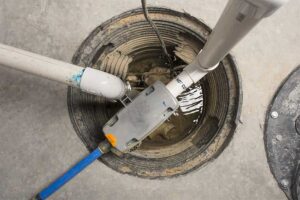
Your sump pump is the first line of defense against a flooded basement, and five warning signs tell you whether it is ready for Ramsey’s next big storm. Watch for frequent cycling, unusual noises, water pooling around the pump, a musty smell, and the effect of repeated power outages. Any one of these means your pump may fail when you need it most. Catching them early, before the next heavy rain, is what keeps your basement dry.
What Are the Signs Your Sump Pump Is Struggling?
The clearest sign of a struggling sump pump is frequent cycling, when it turns on and off far more often than usual. That pattern often means the pump is overwhelmed or not sensing water levels correctly.
Water pooling around the pump is another red flag, since it suggests the unit is not discharging properly. Rust or corrosion on the pump points to age and may mean it is nearing the end of its lifespan. A musty smell can indicate stagnant water that the pump is failing to move.
Finally, if you have not tested your pump in a while, it is worth a check. Staying ahead of these signs is exactly what our Ramsey plumbing team helps homeowners do before storm season arrives.
What Do Unusual Sump Pump Noises Mean?
Unusual noises are one of the most important warning signs not to ignore. Grinding, rattling, or high-pitched sounds usually mean debris is stuck in the impeller or the motor is starting to fail.
These noises signal that the pump’s efficiency is compromised, and ignoring them tends to lead to bigger problems. Pay attention to sudden changes in the sound during operation, too. A pump that suddenly goes silent or runs continuously may not be working properly.
Addressing these signs early is what keeps your pump ready for the next storm. If you are unsure what a noise means, it is best to have it evaluated, and timely sump pump repair and replacement can resolve the issue before the next heavy rain rolls through Ramsey.
How Do You Check for Water Around Your Sump Pump?
Checking for water accumulation is a simple habit that reveals a struggling pump early. Start by inspecting the area right around the pump for any standing water or dampness, which can signal a problem.
Next, look for signs of water seeping in from nearby walls or floors, which helps you tell whether the pump is overwhelmed or malfunctioning. Check the discharge pipe as well to confirm it is carrying water away, because water backing up into the pit points to a blockage.
Finally, keep an eye on the float switch. If it sticks in the off position while water rises, the pump will not activate when it should. Regular checks like these also help catch early professional water leak repair needs before water damage spreads through your basement.
Can Frequent Power Loss Affect Your Sump Pump?
Yes, frequent power loss is a serious threat to your sump pump’s reliability. Sump pumps run on electricity, so repeated outages can leave your basement exposed during exactly the heavy storms that hit the Ramapo River watershed.
Pay attention to how often your lights flicker or appliances shut down unexpectedly, because each outage raises the risk of the pump failing right when you need it. With storms in the Ramsey area seeming to arrive more often, preparedness is essential. A power outage can not only stop the pump but also burn it out if it restarts unexpectedly.
Assessing backup power options, such as a battery backup or generator, is a smart move to keep the pump running through an outage. Taking these steps helps protect your home and keep your basement dry during the next big storm.
When Should You Call a Professional for Sump Pump Issues?
Call a professional the moment your pump makes unusual sounds or fails to start during heavy rain. These signs often point to deeper issues that are not safe or practical to handle alone.
Water pooling in your basement while the pump is running is another clear signal for help. Regular maintenance matters, but you should never ignore the red flags. A pump that runs continuously or cycles on and off too frequently is telling you something is wrong. You should also have it checked after power outages, since these can quietly compromise performance.
Choosing a licensed team gives you reliable service and real peace of mind. With quick response and a commitment to customer satisfaction, our 24/7 emergency plumber service keeps your sump pump in capable hands when a storm is bearing down.
Storm-Proofing Your Ramsey Home
Keeping an eye on your sump pump is essential as storm season approaches. If you notice any of the warning signs above, do not wait, because the cost of a failed pump during heavy rain is far higher than the cost of addressing the issue now.
Staying proactive is the best way to protect your home when the next storm hits. To make sure your sump pump is ready for whatever the season brings, get in touch with our team, and we will help you keep your basement dry.
Frequently Asked Questions
How often should I test my sump pump?
Test your sump pump at least every few months, and always before the wet spring and storm seasons. The simplest test is pouring a bucket of water into the pit to confirm the pump switches on, pumps the water out, and shuts off properly. Regular testing is the easiest way to catch a failing pump before a storm exposes the problem.
How long does a sump pump last?
Most sump pumps last around 7 to 10 years, though heavy use during Ramsey’s storm seasons can shorten that. Signs of age include rust, frequent cycling, and unusual noises. If your pump is approaching a decade of service, it is wise to have it evaluated and plan for replacement before it fails.
Do I need a battery backup for my sump pump?
A battery backup is strongly recommended in this area, because storms that cause basement flooding are often the same ones that knock out power. Without backup power, your primary pump cannot run during an outage, leaving your basement unprotected at the worst possible moment. A battery backup or a standby generator keeps the pump working when you need it most.
Why is my sump pump running constantly?
A sump pump that runs nonstop may be undersized, have a stuck float switch, or be dealing with a high water table or a failed check valve. Constant running wears the motor out quickly and often precedes total failure. If your pump will not shut off, it is worth having a professional diagnose the cause before the motor burns out