
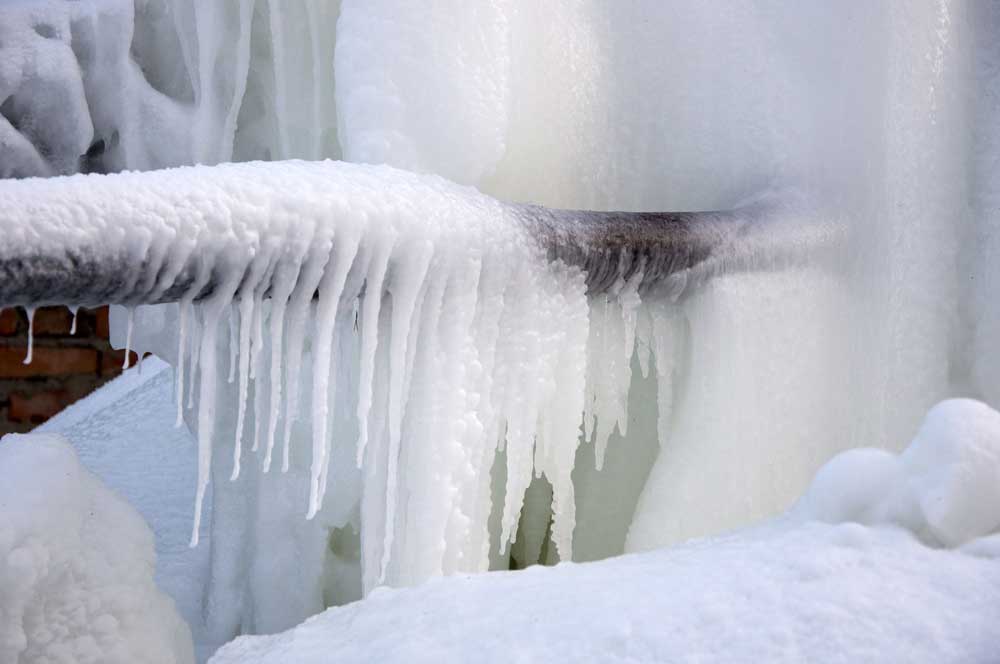
A frozen pipe that has burst floods fast, so the order of operations matters. Shut off the water at the main valve, locate the break, then start drying the affected area before mold takes hold. Those three steps, taken quickly, prevent most of the damage a burst line would otherwise cause.
Titanium Plumbing & Heating is licensed, bonded, and insured, with emergency service and weekend availability when a line lets go.
Key Points
- Shut off the main water supply first, then open a faucet to relieve pressure in the lines.
- A frozen pipe bursts because water expands as it freezes and has nowhere to go.
- Exterior-facing walls are where burst pipes are found; pipes in interior walls rarely freeze.
- Mold colonies can begin forming in as little as 48 to 72 hours, so drying starts immediately.
- A pipe that is frozen but not yet split can often be thawed safely before it fails.
Why Does a Frozen Pipe Burst?
Water expands as it freezes. Inside a closed plumbing line there is nowhere for that expansion to go, so the ice exerts steadily increasing pressure against the pipe wall until the pipe cracks or splits apart.
The flooding does not start at that moment. It starts when the ice melts, at which point water pours from the split and can flood all or part of the home. That delay is why a line can fail overnight and show itself only as things warm up.
Any exposed line running through unheated space is at risk. The American Red Cross identifies outdoor hose bibs, supply lines in unheated basements, attics and garages, and pipes against poorly insulated exterior walls as the most vulnerable.
What Is the First Thing to Do When a Frozen Pipe Bursts?
Shut off the water supply to the home or to the affected line. Some lines can be isolated at their own shutoff valve, but most connect to the home’s main emergency shutoff, so expect to cut water to the whole house while you wait on repairs.
Your emergency shutoff valve is usually in one of three places.
- In the garage or a closet near the front of the home. Most public water mains run beneath the road, which makes a front-facing garage or closet the closest point to the main and the usual spot for the valve. Look along an exposed plumbing line on the wall.
- Beneath a cover on the sidewalk in front of the home. The water meter and the emergency shutoff are sometimes together under a concrete cover at the property line.
- Near the water heater. This keeps the heater supplied and makes shutoff convenient during a water heater emergency. Do not confuse it with the water heater’s own shutoff valve, which looks similar.
Once you find the valve, turn it to the off position. Opening a faucet or two afterward relieves the pressure still in the lines and stops the flow faster.
Locate the Break and Call for Repairs
Sometimes the split is obvious. When the frozen pipe runs inside a wall it is not, and the flooding itself becomes the clue. If water is confined to one area, start there and look for concentrated damage along a single wall, particularly an exterior-facing one, since pipes in interior walls rarely freeze.
You may have to cut into the drywall to confirm. That is fine. Drywall soaked through has to be replaced regardless, so opening it up only moves the timeline forward.
Once you have located the break, call our emergency plumbing team to complete the repair. Where a burst has exposed aging supply lines throughout the house, a whole home repipe is worth discussing rather than patching the same system again.
Begin the Drying Process
Repairing the frozen pipe is not the only repair. Flooding drives mold and mildew growth into the wooden structure of the home, the backing of carpets and rugs, upholstery, curtains, and any possessions that got soaked. Mold colonies can begin forming in as little as 48 to 72 hours, so drying starts immediately rather than after the plumber leaves.
Mold and flood remediation companies do this work with equipment built for drying large areas and difficult materials like carpet, drywall, and structural wood. Many can restore furniture and personal property as well.
Where flooding has reached a basement, sump pump repair keeps the next storm or thaw from repeating the damage.
How Do You Thaw a Frozen Pipe Before It Bursts?
A pipe that is frozen but has not split can usually be saved. If a faucet produces only a trickle on a cold morning, treat that as a frozen line and act before it fails.
- Leave the faucet open. Running water, even a trickle, helps melt the ice and gives the thaw somewhere to go.
- Apply heat to the frozen section. The Red Cross suggests an electric heating pad wrapped around the pipe, a hair dryer, a portable space heater kept clear of flammables, or towels soaked in hot water.
- Never use a blowtorch, kerosene or propane heater, or any open flame. The fire risk is real and the concentrated heat can rupture the pipe outright.
Keep applying heat until full pressure returns, and check other taps, since one frozen line often means others are close behind. If you cannot reach or find the frozen section, call a licensed plumber rather than opening up walls to chase it.
How Do You Keep Pipes From Freezing?
Prevention costs far less than a burst line. The Red Cross recommends draining outdoor hoses and sprinkler and pool supply lines before cold weather arrives, and fitting pipe sleeves or heat tape to exposed runs.
Inside the house, add insulation to attics, basements, and crawl spaces where supply lines run. Open cabinet doors under sinks on cold nights so warm air reaches the pipes behind them, and let a cold tap drip during extreme cold to keep water moving.
Hold the thermostat at the same setting day and night during a cold snap, and never below 55 degrees if you leave the house for a stretch in winter. The heating bill is lower than the deductible.
Document Everything for Your Insurance Claim
Photograph the damage before you start cleaning up. Wide shots of each affected room and close shots of the split pipe, the soaked materials, and any ruined possessions all matter later.
Keep receipts for emergency repairs, remediation work, and anything you replace. Note the date and time you discovered the burst and the steps you took, because a claim generally turns on sudden and accidental damage rather than gradual deterioration.
Call your insurer early, even before the full scope is known. Policies differ on what is covered and on how quickly a claim has to be reported, so confirm your own terms rather than assuming.
Frequently Asked Questions
How long does it take for a pipe to freeze?
It depends on how exposed the line is and how cold it gets, not on a fixed number of hours. A line running through an unheated garage or against an uninsulated exterior wall freezes far sooner than one inside a heated space. Sustained temperatures below freezing, especially with wind on an exterior wall, are the condition to watch.
Can a frozen pipe thaw without bursting?
Yes, and that is the outcome you want. A pipe only splits when the expanding ice has nowhere to go, so a line caught early and thawed carefully often comes through intact. The risk is in how it is thawed. Gentle, even heat with the faucet open is safe; an open flame is what turns a frozen pipe into a burst one.
Should I turn the water off if I am leaving during winter?
For anything longer than a weekend, shutting the main and draining the lines removes the risk entirely. For shorter trips, leaving the heat at a steady setting and no lower than 55 degrees is usually enough. The worst case is a frozen pipe bursting in an empty house, where water runs unnoticed for days.
Get Ahead of the Next Frozen Pipe
A burst line is one of the few plumbing emergencies where the first fifteen minutes decide how expensive the whole thing becomes. Know where your main shutoff is before you need it, and insulate the exposed runs before the first hard freeze.
If a pipe has burst, or you have found one frozen and want it handled before it splits, contact our team today and we will get someone out to you.